

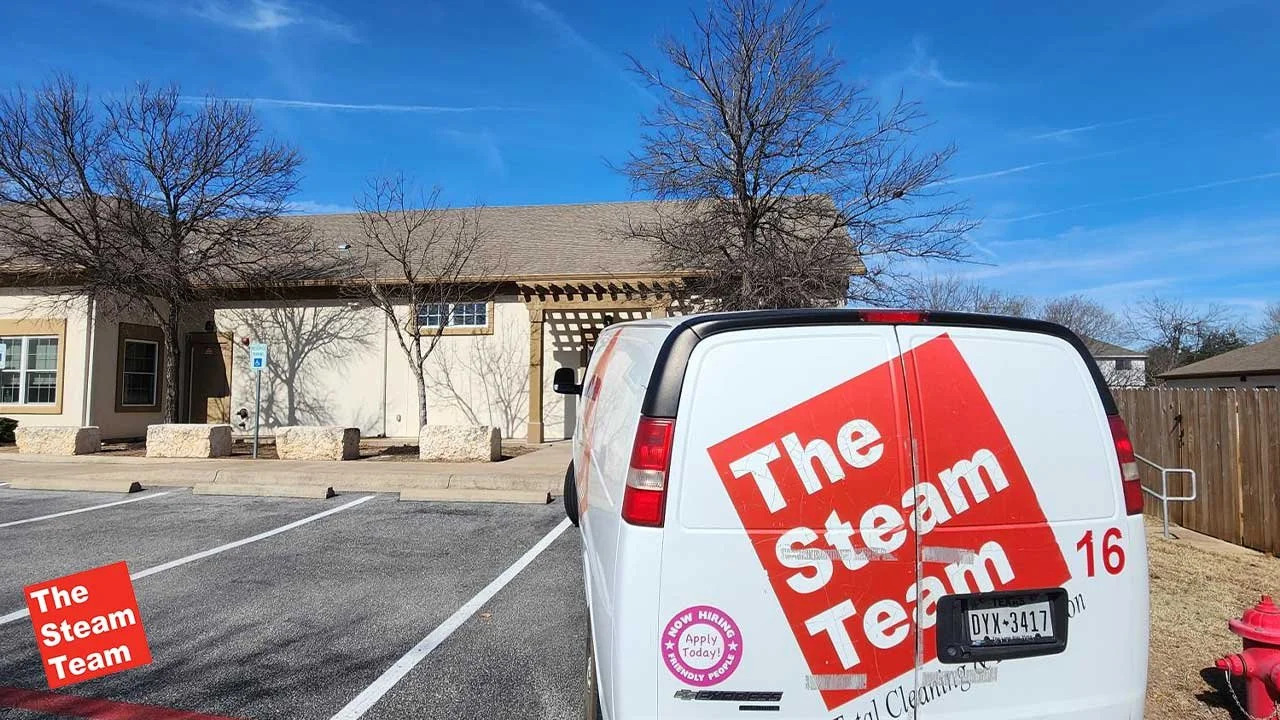
Contact The Steam Team in North Austin
Our restoration crews come to you, day or night, anywhere across Austin and the surrounding communities we serve. Call our North Austin restoration line at any hour to get a crew dispatched to your property. You're also welcome at our 9901 Burnet Rd office to drop off insurance paperwork, meet with our team about your claim, or tour our restoration facility. Spanish-speaking staff is available.
Service areas: Austin, Rollingwood, West Lake Hills, Sunset Valley, Bee Cave, Lakeway, Round Rock, Cedar Park, Pflugerville, Buda, Manor, and more.
About Our Structural Drying in Austin
Once standing water is gone, the hardest part of water damage is the moisture you can't see. Austin property owners usually call us when:
Drywall, baseboards, or flooring still feel damp days after a leak was fixed
Hardwood floors start cupping or lifting as water sits in the subfloor
A musty smell suggests moisture trapped inside walls or insulation
Fans and a household dehumidifier have run for days without results
An insurance adjuster needs proof that the structure was dried properly
Structural drying is the process of removing moisture from a building's materials, including framing, subfloors, wall cavities, insulation, and flooring, until they return to normal moisture levels. It uses moisture mapping to find wet areas, then commercial-grade dehumidifiers and airflow systems to pull water out of materials rather than only drying their surfaces. It's the step that prevents warping, rot, and mold after a leak, flood, or firefighting effort.
Get your property properly dry, not only dry to the touch, with readings to prove it. The Steam Team's IICRC-certified technicians work through five stages:
Inspection and moisture mapping. Moisture meters and hygrometers trace where water has spread inside walls, ceilings, and floors, setting a drying plan for each area.
Equipment setup. Commercial dehumidifiers and air movers are positioned to move air across the wet materials that need it most.
Active drying. Equipment runs continuously while temperature and humidity are monitored, and placement is adjusted as moisture is released.
Daily monitoring and documentation. Moisture readings are recorded each visit to track progress and support your insurance claim.
Final verification. Equipment is removed once readings confirm the structure is dry and ready for any repairs.
What You Get With Every Structural Drying Job
24/7 emergency response, every day of the year
IICRC Certified Firm (Registration #70666), certified in Applied Structural Drying and Water Damage Restoration
Moisture mapping to find water hidden behind walls and under floors
Commercial-grade dehumidification and airflow systems sized to the space
Documented moisture readings from the first visit to the final verification
Claim documentation for insurers, including State Farm, Allstate, USAA, Farmers, and Liberty Mutual
Locally owned and serving Austin since 1983
What Is Structural Drying?
Structural drying is the professional removal of moisture from a building's structure after water damage. Technicians map moisture inside walls, floors, and framing, then use commercial dehumidifiers and air movers to bring those materials back to normal moisture levels. In Austin, The Steam Team documents readings throughout, so you know the structure is dry before repairs begin.
How Do You Know When a Building Is Fully Dry?
A building is fully dry when moisture readings in affected materials match readings from unaffected areas of the same property. The Steam Team takes readings with moisture meters and hygrometers on every visit and compares them against those dry reference points. Equipment stays in place until the numbers confirm drying is complete, not when surfaces only feel dry.
Why Aren't Fans and a Household Dehumidifier Enough?
Household fans move surface air but can't pull water out of framing, subfloors, or insulation, and small dehumidifiers can't keep up with the moisture a soaked room releases. Commercial structural drying equipment is sized to the space and placed to target specific materials. Without it, moisture can stay trapped long enough to cause warping, rot, or mold.
Structural Drying in Austin: What Our Technicians Want You to Know
Drying is the stage most often rushed after water damage. Here's how our technicians approach it and what to avoid while the equipment is running.
Why Dry to the Touch Isn't Dry
Drywall and flooring often feel dry within a day or two, while the framing, subfloor, and insulation behind them stay wet. Our technicians don't judge drying by touch: we set dry reference readings from unaffected areas and keep equipment running until every affected material matches them, the approach behind our IICRC Applied Structural Drying certification. In Austin's humid climate, it matters even more because damp air slows evaporation and gives trapped moisture more time to cause damage.
Common Mistakes to Avoid During Drying
Turning equipment off overnight. Drying works continuously, so we ask you to leave dehumidifiers and air movers running until our technicians adjust or remove them.
Opening windows to "help" on humid days. Outdoor air in Austin is often wetter than the air our dehumidifiers create, so we advise keeping the building closed.
Moving equipment to a different room. We place each unit to target specific wet materials, and moving it can leave those areas damp.
Starting repairs before final readings. We confirm dryness with meter readings first, because closing up a wet wall traps moisture inside.
What Our Clients Say
“Their use of industrial-strength fans, dehumidifiers, and moisture meters ensured that the drying process was done thoroughly and correctly to prevent mold growth.”
- Alex Ladage
“The water damage restoration team handled the interior issues quickly, drying out the affected areas and making sure there were no lingering problems.”
- Tiffany Moorman
“We had a leak coming in from our home’s roof. We had equipment setup to start drying the water within a few hours of reporting the problem.”
- Truman Glenn
Other Services in Austin
Structural drying is usually one part of a bigger recovery. These services often come before or after it.
Water Damage Restoration
Get water extracted, the structure dried, and damaged materials repaired under one coordinated restoration plan.
Water Damage Restoration in Austin →
Fire Damage Restoration
Recover from fire, smoke, and soot, with drying for the water used to put the fire out built into the plan.
Fire Damage Restoration in Austin →
Emergency Response
Have a crew on site at any hour to extract standing water before it soaks further into the structure.
Emergency Response in Austin →
Contents Pack-Out and Storage
Clear furniture and belongings out of wet rooms so drying equipment can reach floors and walls, with secure climate-controlled storage.
Contents Pack-Out and Storage in Austin →
Mold Remediation
Remove mold safely if moisture has already led to growth, with containment, HEPA filtration, and antimicrobial treatment.
Mold Remediation in Austin →
Awards & Certifications
The Steam Team holds the following restoration certifications, licenses, and industry recognition.
Certifications and licenses
IICRC Certified Firm, Registration #70666 — Water Damage Restoration (WRT), Applied Structural Drying (ASD), Fire & Smoke Restoration (FSRT), Applied Microbial Remediation (AMRT), Odor Control (OCT)
Texas Mold Remediation Contractor License (TDLR), #RCO1264
EPA Lead-Safe Certified Firm, License NAT-56770-4
OSHA HAZWOPER Safety Certification
DKI — 10 Year Distinguished Member
Awards
Golden Hammer Award — Water Damage Restoration (2011, 2012, 2020, 2021, 2023, 2024)
Austin American-Statesman "Best of the Best" — Water Damage Restoration Services (2018–2025)
Westlake Business of the Year (2026)
Ratings and memberships
BBB A+ Rating, BBB Accredited Business
Restoration Industry Association (RIA) Member
Building Owners and Managers Association (BOMA) Member
International Facility Management Association (IFMA) Member
What Austin's Older Homes Mean for Structural Drying
Much of Austin's housing was built decades ago, and the materials inside those homes change how drying has to be done. Two features of the local housing stock come up again and again on drying jobs across the city.
Mid-century neighborhoods with original plumbing. Large parts of Allandale, Crestview, and Hyde Park were built between the 1950s and 1980s, and many homes there still carry original cast-iron or galvanized pipes. When those pipes fail, water often runs inside walls and under floors before anyone notices, so drying depends on mapping exactly where it traveled rather than treating only the visible damage.
Historic homes with early building materials. Districts such as Clarksville and Travis Heights hold a concentration of early-20th-century homes with original or early-generation plumbing and wiring. Drying these homes calls for careful equipment placement and monitoring that bring original wood, plaster, and flooring back to normal moisture levels without damaging materials that can't easily be replaced.
Frequently Asked Questions
How long does structural drying take?
Most structural drying takes several days, depending on how much water got in, which materials are wet, and the indoor humidity. Dense materials such as hardwood and subfloors take longer than drywall. Equipment stays in place until moisture readings confirm every affected area has returned to normal levels.
Can I stay in my home during structural drying?
Usually, yes, as long as the affected area is safe. Drying equipment runs day and night and produces noise and warm airflow, so some families prefer to stay elsewhere. You don't need to be home for visits, but the crew needs access to the property and a working power supply.
Can water-damaged hardwood floors be saved?
Often, if drying starts quickly. Hardwood that has cupped can flatten as moisture is drawn out of the boards and the subfloor beneath them. Floors left wet too long or exposed to contaminated water may need replacing. Moisture readings during drying show which boards are recovering.
Is structural drying covered by insurance?
Structural drying is usually part of a covered water damage claim when the loss is sudden and accidental, such as a burst pipe. Your adjuster decides coverage. Insurers typically expect moisture logs showing the drying process, which The Steam Team records on every visit to support your claim.
What happens if drying is delayed?
Delays let moisture spread further into framing, insulation, and flooring, raising the risk of warping, rot, and mold. The EPA notes that mold can begin growing on damp materials within 24 to 48 hours. Starting drying quickly limits how much material needs to be removed and keeps repair costs down.